3 cabins in stock. Free delivery available to Sydney, Central Coast, Newcastle & Hunter Region. Enquire now with our no obligation form.
The 2.7m Gate Problem: Delivering Cabins into Tight NSW Sites
On paper, putting a 2.5m wide portable cabin through a 2.7m gate gives you 20cm of clearance. But real-world driveways have slopes, ruts, and turns. Here is what actually happens at the gate and how we get around it.
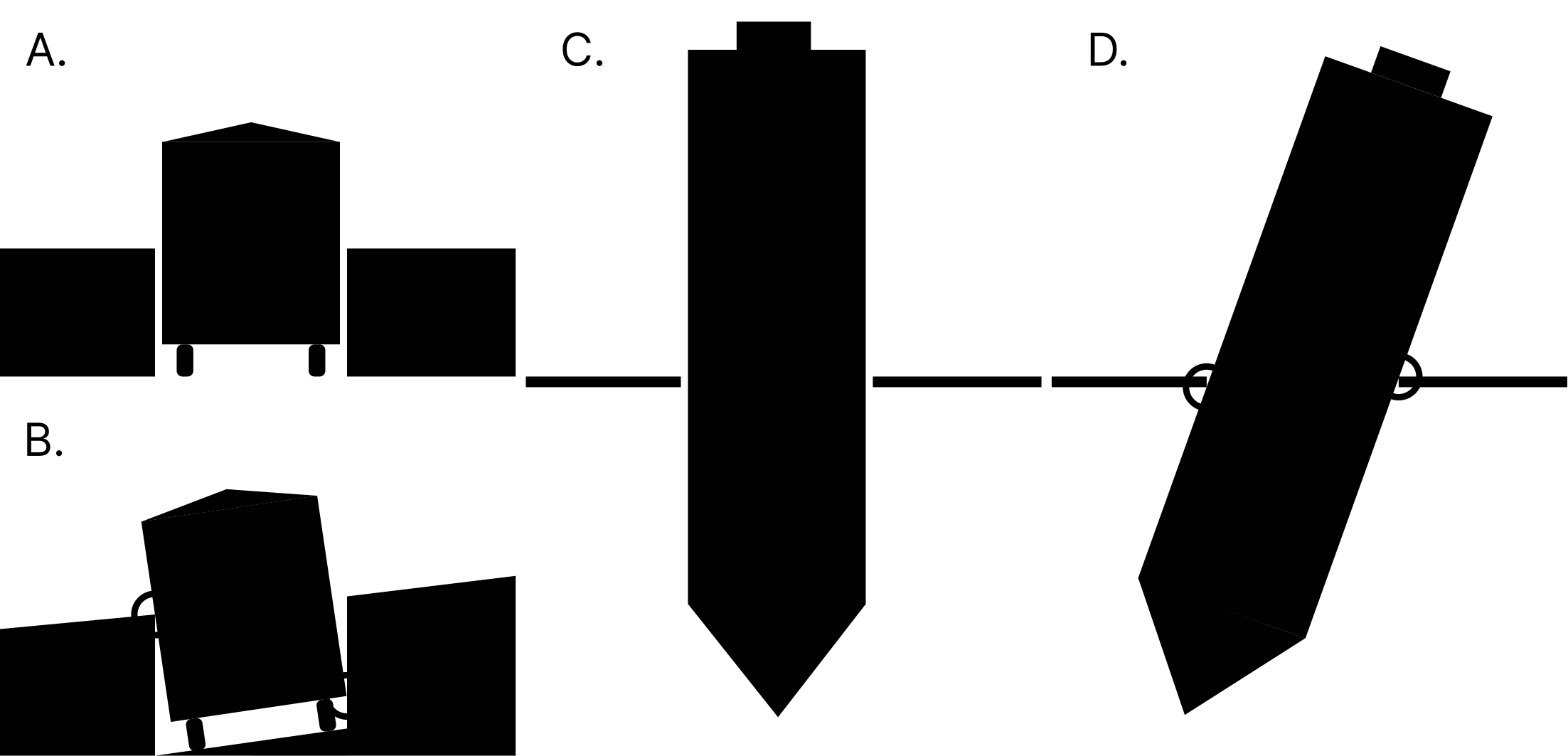
Shows how a 2.5m cabin clears on flat ground (A), but tilts and clips the gate posts if the ground drops to one side (B).
Shows how a straight line gives clean clearance (C), whereas trying to turn through the opening causes the cabin corners to hit the posts (D).
We get asked this all the time by people looking to put a cabin in their backyard or out on their block:
Mathematically, yes. But in practice, getting through that gate safely depends on what the ground is doing before the gate, under the gate, and right after it.
Why 2.5m and 2.7m?
These two measurements come up constantly across New South Wales:
- 2.5 Metres (Cabin Width): Under Australian road rules, 2.50m is the maximum width allowed for road transport without wide-load permits or pilot vehicles. That is why our cabins are built to this exact width.
- 2.7 Metres (Standard Double Gate): Many suburban side gates and rural farm gates throughout NSW are hung with a clear opening between posts of around 2.70m (roughly 9 feet).
On paper, that leaves 200mm of total clearance, or 100mm on each side. That works fine on a flat concrete slab, but moving an 8-metre long cabin across grass, gravel, or a sloped driveway is a different story.
The Two Common Issues: Slopes and Turns
When a delivery gets tight, the gate opening itself is rarely the only problem. The issue usually comes down to one of two things shown in the diagram:
Cross-Fall and Uneven Ground (Diagram B)
Our cabins sit on a trailer chassis and stand between 3.2m and 3.5m tall.
If the ground through the gate slopes sideways, or one wheel rolls through a dip while the other sits up on a ridge, the cabin leans. Because the cabin is over 3 metres high, even a slight 5 to 8 degree tilt moves the top of the cabin sideways by 200mm to 300mm.
Turning Through the Opening (Diagram D)
In Diagram C, the cabin pulls straight up to the gate, goes straight through, and continues straight ahead. As long as the ground is level, it clears easily.
The problem happens when you have to turn into the gate from a narrow driveway or lane, or start turning immediately behind the gate to avoid a shed, house eave, or garden bed.
A long trailer does not pivot in the middle. When turning, the front corner and the rear overhang swing out wide. As shown in Diagram D, the diagonal footprint of the cabin becomes much wider than 2.5m, and the corners catch the gate posts. You need a straight run-up in front of the gate and straight room behind it.
How We Deal with Tight Access
Having an unlevel gate or a tight entrance does not mean we cannot deliver. Every property is different, and we have a few standard ways to work around tricky spots:
Hardwood Sleepers and Bricks
If one wheel track drops away at the gate, we can pack hardwood sleepers or solid pavers under the low-side wheel. Leveling the wheels as the cabin rolls through keeps the cabin upright and prevents the roofline from leaning into the post.
Straight Run-Up Planning
We line up the tow vehicle and cabin well before reaching the gate, aiming for at least 8 to 10 metres of straight travel before and after the opening before doing any turning.
Temporary Gate or Fence Removal
With timber or Colorbond fencing, taking off a gate leaf or unscrewing an adjacent fence sheet often takes less than 15 minutes. It gives us plenty of room to roll through without risking damage to the fence or cabin.
Specialised Tow Vehicles
Our drivers use purpose-equipped 4WD vehicles and jacks designed for slow, controlled maneuvering in tight residential spaces.
Quick Checks for Your Gate
If you have a 2.7m gate or tight side access, check these four points before delivery day:
- Measure Between Post Faces: Measure the clear gap between the hinges, latch stops, or posts at the narrowest point.
- Check the Level Across the Gate: Look across the opening at ground level. If one side is noticeably lower, let us know so we can bring sleepers or ramps.
- Check the Approach and Exit: Make sure there is enough straight distance in front of and behind the gate so the vehicle does not need to turn while passing through.
- Watch for Overhead Obstacles: Check for tree limbs, guttering, eaves, or power lines under 3.5m clearance.
Not Sure If Your Gate Will Work? Send Us a Photo
Every site is different. If you are unsure whether your driveway or gate has the clearance, send us a couple of photos or a video walk-through from the street to the setup spot. We can check the slope, look at the turning room, and let you know if we need to pack sleepers or make minor adjustments before delivery day.